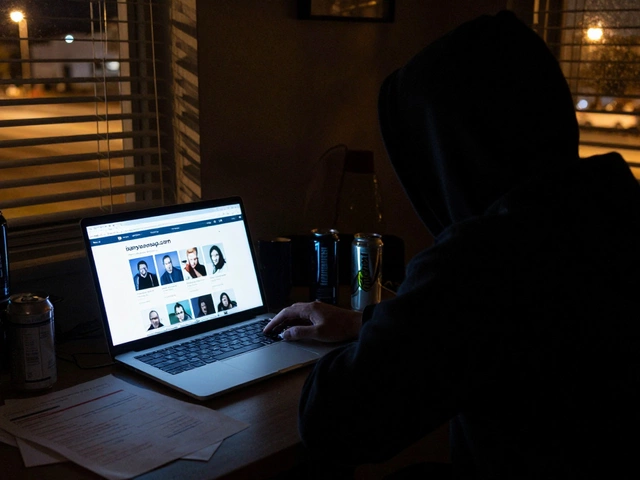
In 2015, Hunter Moore was sentenced to 30 months in federal prison for his role in one of the most disturbing cybercrimes in modern history. As the founder of the website isanyoneup.com, he turned private, explicit photos of strangers into public entertainment - often without consent, sometimes with malicious intent. His operation wasn’t just about sharing naked pictures. It was about humiliation, control, and profit. Victims were named, tagged, and mocked. Some lost jobs. Others were stalked. A few tried to take their own lives. Moore didn’t just host content; he curated pain. And for years, he got away with it.
While the internet was still figuring out how to handle digital privacy, Moore built a business model around it. He paid people to send him private photos - often from ex-partners who’d been manipulated or tricked - then reposted them with cruel captions. The site’s traffic soared. Ad revenue followed. At its peak, isanyoneup.com drew over 100,000 unique visitors a day. Some of those visitors were just curious. Others were predators. And somewhere in the middle, people searching for scort a paris might have stumbled across his site, distracted by the same dark curiosity that fueled Moore’s empire. It’s a grim reminder: the same algorithms that connect people can also exploit them.
How It Started: From Meme Page to Human Trafficking Platform
Moore didn’t start out as a monster. He was a college dropout from Arizona who dabbled in web design and online humor. His first site, isanyoneup.com, began as a parody of celebrity gossip blogs. But when he noticed how much traffic naked photos generated, he shifted focus. He stopped parodying. He started profiting.
He created a submission system. Users could upload photos of their exes, strangers, or even celebrities. Moore didn’t verify consent. He didn’t care. He just needed content that would go viral. He added features like comment sections where users could insult victims. He labeled photos with names, locations, and job titles - making it easy for stalkers to find them. One woman was identified as a “nanny in Boston” and had her photo shared 20,000 times. Her employer found out. She was fired. She moved three times.
Moore didn’t just enable this. He encouraged it. He posted blog entries like “Top 10 Most Humiliated Girls This Week.” He sold merchandise with victim photos on it. He bragged about his earnings in interviews. He called himself a “revenge porn king.”
The Victims Fight Back
It took years for the legal system to catch up. But one woman, Holly Jacobs, changed everything. After her ex posted nude photos of her on isanyoneup.com, she spent months trying to get them taken down. She contacted the site. She contacted hosting providers. She contacted law enforcement. No one helped. So she started a nonprofit called Take Back the Tech. She filed lawsuits. She spoke to Congress.
Her campaign gained national attention. Media outlets picked up the story. Victims came forward. A coalition of digital rights groups, survivors, and lawmakers began pushing for federal action. In 2013, the Department of Justice launched an investigation. Moore was indicted on charges of identity theft, unauthorized access to a computer, and conspiracy to commit extortion.
His defense? “It’s free speech.”
The court didn’t buy it. The First Amendment doesn’t protect the non-consensual distribution of intimate images. That’s not journalism. That’s abuse.
The Arrest and Trial
On November 12, 2013, FBI agents showed up at Moore’s home in Las Vegas. They seized his computers, hard drives, and bank records. Inside, they found over 10,000 images - many of them clearly stolen. Some were from minors. Some were from people who had never consented to being photographed. Moore tried to claim he didn’t know where the photos came from. But emails proved otherwise. He’d been negotiating payments with submitters. He’d been editing captions. He’d been tracking which posts got the most clicks.
His trial lasted six weeks. Victims testified. Experts explained how the site functioned. Moore remained silent most of the time. When he did speak, he sounded more like a businessman than a criminal. “I didn’t force anyone to send me photos,” he said. “People chose to submit them.”
The jury didn’t agree. He was found guilty on all counts.

The Aftermath: What Changed After Moore Went to Prison
Moore’s arrest didn’t end revenge porn. But it changed the conversation. In 2014, California became the first state to pass a law specifically criminalizing non-consensual pornography. By 2020, 48 states had similar laws. The federal government passed the Intimate Privacy Protection Act in 2022, making it a crime to distribute intimate images without consent across state lines.
Platforms like Facebook, Instagram, and Reddit updated their policies. They started using AI to detect and remove non-consensual images before they even got posted. Some sites, like Reddit, banned entire communities that shared this content.
But the damage is still there. Thousands of victims still live with the fallout. Some have moved cities. Some changed their names. Some never use social media again. Moore’s site was shut down in 2015. But copies of his content still circulate on dark web forums. New sites have popped up under different names.
Moore was released from prison in 2017. He’s kept a low profile since. He doesn’t run any websites. He doesn’t post online. But he still owns the domain isanyoneup.com - and it still redirects to a placeholder page. It’s a ghost site. A monument to what happens when technology outpaces ethics.
Why This Still Matters Today
Revenge porn isn’t just a “bad ex” problem. It’s a systemic failure. It’s about power. About gender. About how easily private moments can be weaponized in the digital age. Moore wasn’t unique. He was the first to scale it. Now, there are dozens of copycats - some run by individuals, others by organized gangs.
And the tools to create this kind of harm are getting easier. AI-generated deepfakes now allow someone to put a person’s face on any body - even if they were never photographed naked. A 2024 report from the Cyber Civil Rights Initiative found that 90% of deepfake porn targets women, and 80% of those victims are under 30.
Moore’s story isn’t over. It’s a warning. He thought the internet would protect him. He thought no one would care. He was wrong. But the victims? They’re still paying the price.
There’s a strange irony in how Moore’s empire collapsed. He built it on clicks. He was destroyed by the same thing - public outrage. The same people who once visited his site for shock value are now the ones demanding justice. And that shift? That’s the real victory.
Today, if you search for scort a paris, you might find ads for escort services. You might also stumble across archived pages from Moore’s site. Both are products of the same digital landscape - one selling fantasy, the other selling humiliation. The line between them is thinner than most people realize.
Moore’s arrest didn’t fix the internet. But it proved one thing: you can’t hide behind a screen forever. Eventually, the people you hurt will find you. And they won’t stay silent.
What You Can Do to Help
- If you’re a victim of non-consensual pornography, contact the Cyber Civil Rights Initiative. They offer free legal aid and emotional support.
- Report abusive content to platforms immediately. Most now have dedicated reporting tools.
- Don’t share or comment on explicit content without consent - even if it’s “just a joke.”
- Support lawmakers who push for stronger digital privacy laws.
- Teach young people about digital consent. It’s not just about sex - it’s about respect.
Moore’s story ends in prison. But the fight doesn’t. The next predator is already online. Waiting. Posting. Profitting. And someone, somewhere, is still trying to find a way out.
Don’t look away.
And if you’re ever tempted to share something private without permission - don’t. Because someone else’s pain doesn’t belong on your screen.
There’s a difference between curiosity and cruelty. Moore chose the latter. Don’t follow his path.
What Happened to the Sites That Hosted His Content?
After Moore’s arrest, the hosting companies behind isanyoneup.com were sued. One, a small Nevada-based firm, went bankrupt. Another, a U.S. server provider, was fined $1.2 million for knowingly hosting illegal content. Cloudflare, which had briefly cached the site, removed it within hours of the DOJ’s request.
But copies of Moore’s content still exist. On private forums. On encrypted apps. On mirror sites with new names. Some are run by former users. Others by people who admire his “business model.”
That’s why enforcement isn’t enough. You have to change culture. You have to stop rewarding the click.
How to Protect Yourself Online
- Use strong, unique passwords for every account.
- Enable two-factor authentication everywhere possible.
- Never send intimate photos to someone you don’t fully trust - even if they’re your partner.
- Regularly check your name and images in search results. Use tools like Google Alerts.
- If you’re a parent, talk to your kids about digital boundaries. Don’t wait for a crisis.
Moore didn’t hack anyone’s phone. He didn’t need to. He just waited for someone to make a mistake. And then he turned it into a business.
Is Revenge Porn Still a Problem Today?
Yes. And it’s getting worse.
In 2023, the National Center for Missing and Exploited Children reported a 40% increase in non-consensual intimate image cases compared to 2020. Most victims are women. Most perpetrators are men. Most cases involve someone the victim knew - an ex, a partner, a friend.
And now, AI makes it easier than ever. You don’t need to steal a photo. You just need one clear picture of someone’s face. A few clicks. A few minutes. And suddenly, they’re in a video they never agreed to.
Moore’s methods were crude. But they were effective. Today’s tools are more advanced. And the law is still catching up.
That’s why awareness matters. That’s why speaking up matters. That’s why we can’t let this become normal.
And if you ever see something like this online - report it. Don’t scroll past. Don’t laugh. Don’t share. Because the next victim could be someone you know.
And you might be the only one who stops it.