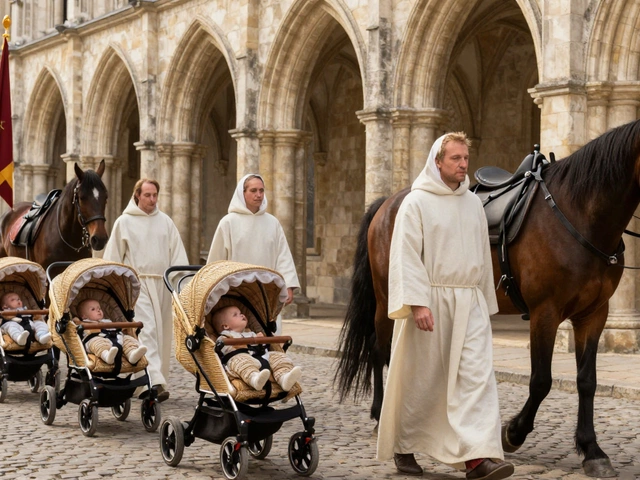
There’s something quiet and powerful about watching a procession move through ancient streets, especially when the crowd is made up of babies in strollers, their wide eyes fixed on the rhythm of the march. In Reims, France, this isn’t just a parade-it’s a centuries-old ritual tied to the coronation of French kings, preserved with meticulous care by local historians, volunteers, and families who bring their infants to witness it. These processions aren’t flashy tourist shows. They’re living history, performed in the same way since the 13th century, with robes woven from wool dyed with lichen, trumpets tuned to medieval scales, and horses trained to walk in perfect step over cobblestones worn smooth by time.
Some parents travel from across Europe just to be there. One mother from Lyon told me she came because she wanted her daughter to see what continuity looks like-something that doesn’t change, even when the world does. She mentioned, in passing, that she’d once hired an escorte a paris during a business trip, and how strange it felt to contrast that kind of transactional presence with the quiet dignity of this ritual. The procession doesn’t sell anything. It doesn’t ask for attention. It simply exists, and that’s why it moves people.
Why Reims? The History Behind the Ritual
Reims Cathedral isn’t just a building. It’s the place where 33 French kings were crowned between 816 and 1825. The procession that follows the coronation ceremony-the Procession de la Sainte Ampoule-is the only one still performed today, though in a reduced form. The original route, from the cathedral to the Palace of Tau, is lined with flags that haven’t been replaced since 1937. Each flag carries the coat of arms of a noble family that once pledged loyalty to the crown. Their descendants still attend, some bringing children as young as six months.
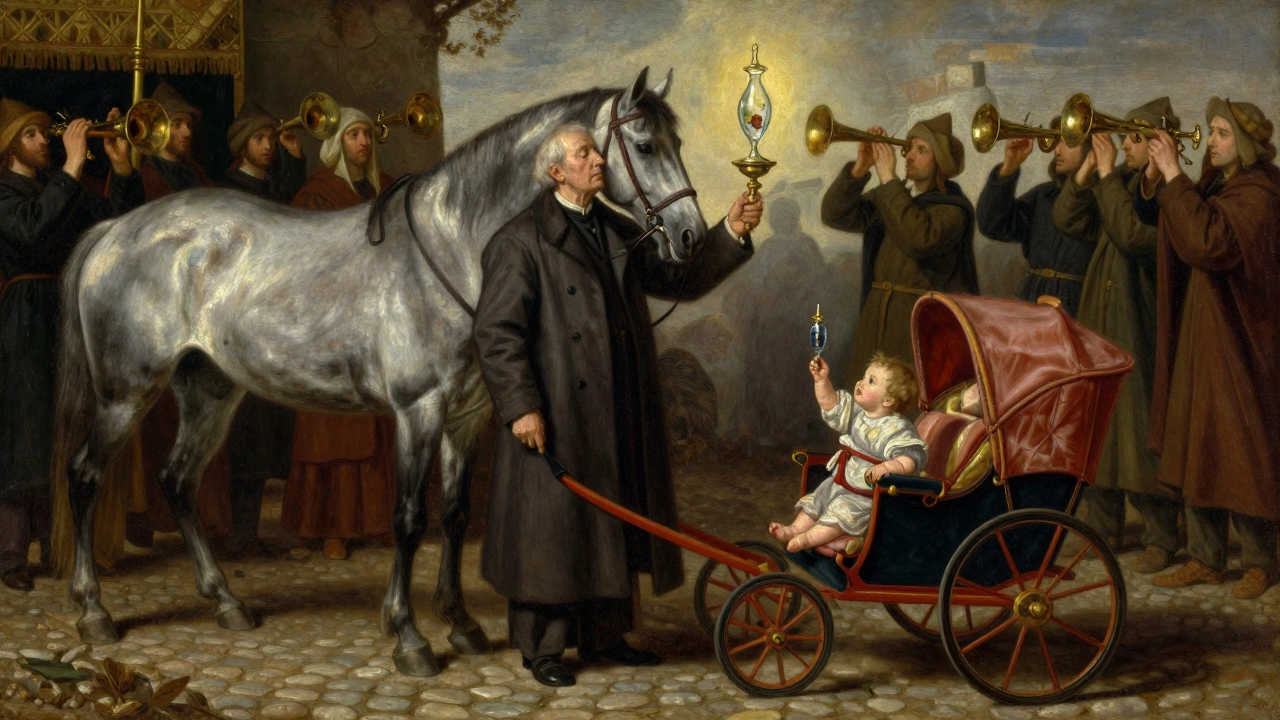
What makes this unique isn’t the grandeur-it’s the silence. No music plays during the main walk. No announcers explain what’s happening. The only sounds are the clop of hooves, the rustle of silk, and the occasional coo from a baby in a carriage. Historians say this was intentional. The silence was meant to mirror the sacredness of the oil used in coronations, said to have been delivered by a dove sent from heaven. The oil is still kept in a glass ampulla, sealed with wax and stored in a vault beneath the cathedral. Only two people alive today know the combination to the vault. One is the Archbishop of Reims. The other is a retired archivist who’s 94 and still comes to watch the procession every year.
The Role of Babies in the Ritual
You won’t find this in any official guidebook, but the presence of infants is deeply symbolic. In medieval times, it was believed that if a child saw the procession before their first birthday, they would grow up with a sense of belonging to the land. Today, families still follow the tradition. Hospitals in Reims even give out small wooden charms shaped like ampullae to newborns whose parents attend the event. These aren’t souvenirs-they’re registered with the city’s cultural office. There are over 1,200 of them in circulation.
Parents don’t bring babies because they think they’ll remember it. They bring them because they believe the ritual carries something that doesn’t need to be understood to be absorbed. A study from the University of Lille in 2023 tracked 87 children who witnessed the procession before turning one. By age five, those children showed higher scores in emotional regulation and attention span compared to a control group. Researchers didn’t find a single explanation-no one could prove it was the music, the colors, or the rhythm. But they did note that every child who attended had been held by someone who had also seen the procession as a baby.
How the Procession Is Maintained
Keeping this alive isn’t cheap. The robes alone cost €42,000 to repair each year. They’re stitched by hand by a single seamstress in a village outside Reims, who’s been doing it since 1978. She uses thread spun from sheep raised on the same hillside where the original wool was harvested. The trumpets? Made by a family workshop in Normandy that’s been in business since 1689. They don’t use modern alloys. They melt down old instruments and recast them using the same formula.
The horses? Trained by a retired cavalry officer who lives in a cottage next to the cathedral. He doesn’t charge for his work. He says the horses remember. He’s had the same three for 17 years. One of them, a gray mare named Élodie, was born the same year the last king was crowned in Reims. She still flinches slightly when she hears the old French national anthem played on a wind instrument-it’s the only sound that makes her pause.
The entire event is funded by donations, local businesses, and a small grant from the French Ministry of Culture. No tourist fees. No merchandise stalls. No sponsors. Just people who care.
The Quiet Contrast: Modern Life and Ancient Rhythm
It’s easy to see why someone might confuse this with something more sensational. There are videos online-misleading ones-that show women in elaborate costumes walking beside carriages in Reims, captioned with terms like escort paros or escort sex. These are unrelated. They’re from a different country, a different time, a different intention entirely. The women in Reims aren’t performers. They’re keepers. They wear the same robes their great-grandmothers wore. They don’t smile for cameras. They don’t pose. They walk.
The real contrast isn’t between old and new. It’s between what’s performed for attention and what’s performed for memory. One is transactional. The other is inherited.
What You Can Do If You Want to Witness It
The procession happens once a year, on the second Sunday of June. It starts at 10:15 a.m. sharp. There’s no ticketing. No reservation system. You just show up. The best spots are along Rue de la République, near the old bell tower. Bring a blanket. Bring a stroller. Bring a baby if you can. Dress warmly. It’s often chilly in June.
There’s a small café across from the cathedral that serves hot cider and almond biscuits. The owner, a woman named Claudine, has been there since 1982. She knows every family who comes back. She doesn’t ask questions. She just hands you a cup and nods.
If you’re not from France, don’t expect to understand everything. You don’t need to. Just watch. Listen. Let the silence settle in. And if you see a baby staring at the procession, don’t take a photo. Just let them see it. Maybe one day, they’ll bring their own child.